Ghee, til oil or mustard oil: which fuel for your diya?
By Navratri Wicks, 20 Jun 2026

Ask three families what they put in their diya and you may get three answers. Fuel choice is partly tradition and partly practical. Here is how the common choices compare.
Ghee
Pure cow ghee is the traditional choice for the daily aarti and for many festivals. It gives a soft, golden flame and a gentle aroma. Ghee is solid at cool temperatures, so in winter warm it slightly before pouring, and soak the wick well so it lights easily.
Til (sesame) oil
Til oil is widely used in South Indian homes and temples, and by many families for Shani and Hanuman pooja. It burns steadily, is more economical than ghee for lamps that burn for hours, and suits both lambi batti and twisted samai wicks.
Mustard oil
In North and East India, mustard oil is the everyday choice for diyas, and for the rows of clay diyas lit outside on Diwali. It burns with a slightly brighter flame. Keep wicks a little shorter with mustard oil so the flame doesn't smoke.
Coconut oil
Common in Kerala, coconut oil is used in nilavilakku and kuthuvilakku lamps. It solidifies in cold weather, so it's best in warmer climates.
Which wick for which fuel?
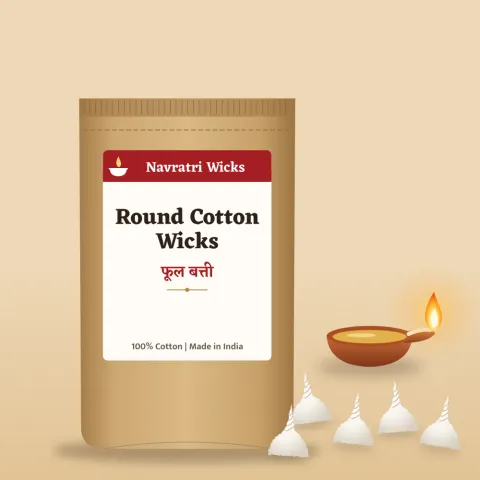
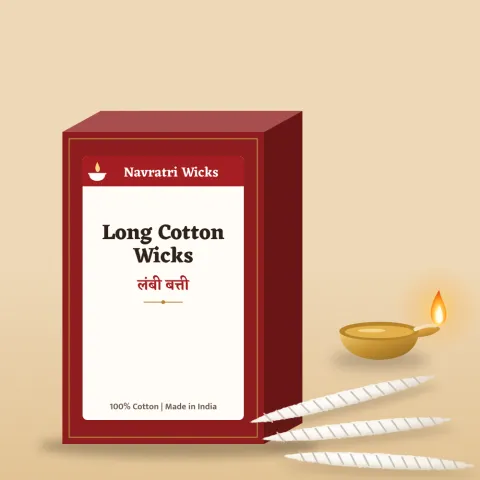
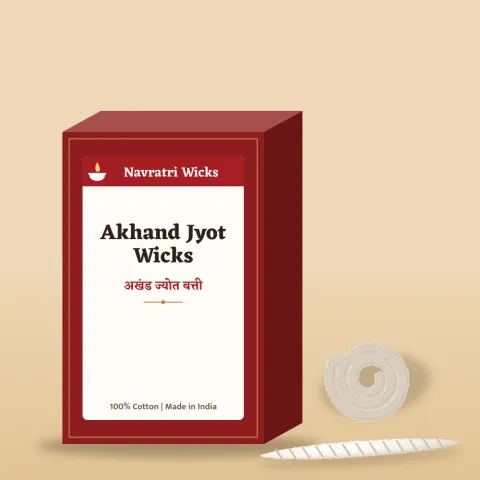
Any 100% cotton wick works with all four. What matters more is the size of the flame you want and the lamp you are using: phool batti for small diyas, lambi batti for deepaks, twisted wicks for samai, and thick akhand wicks for lamps that burn for days.
A note on safety
Whatever the fuel, place lamps on a stable, heat-proof surface, away from curtains and decorations, and never leave a lit lamp unattended around children or pets.



 Akhand jyoti for Navratri: keeping the lamp alight for nine nights
 Phool batti or lambi batti? Choosing the right wick for every diya
 Storing cotton wicks in the monsoon so they light first time