How to make cotton wicks at home (and when it's easier to buy them)
By Navratri Wicks, 14 Jul 2026
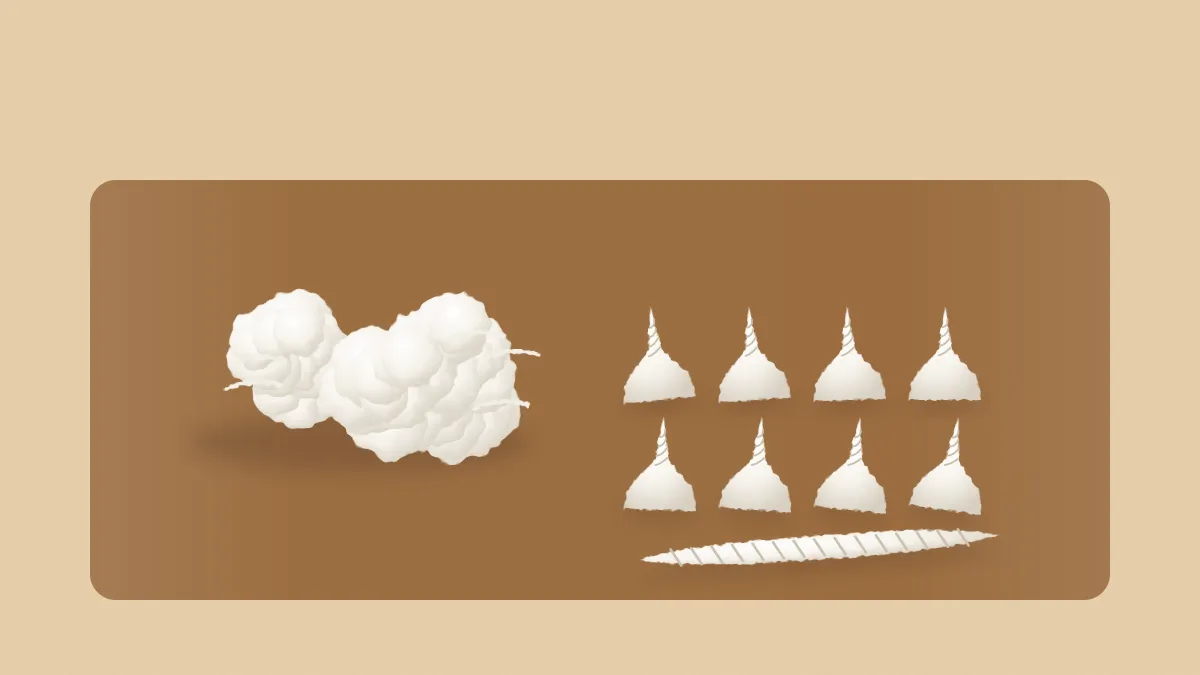
Before packaged wicks, every household made its own. Many still do: an afternoon with a bowl of rui and a few hundred wicks rolled for the month. If you'd like to try, here is how.
Start with the right cotton
Use clean, carded loose cotton (rui). Carded cotton has its fibres combed open, so it pulls apart into soft tufts. Pleated cotton rolls work too, but you'll need to fluff each piece first. Unbleached desi kapas holds a twist especially well.
Phool batti, the round wick
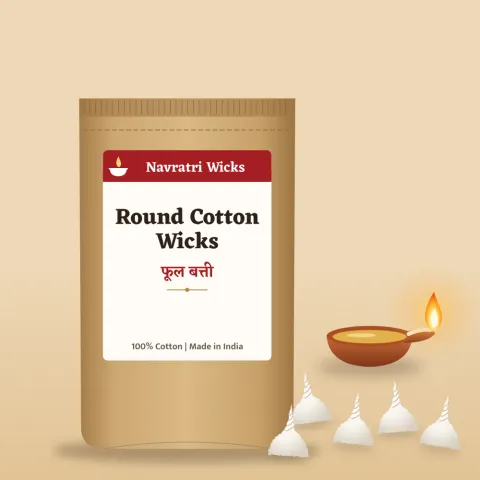
Pull a tuft about the size of a grape. Hold it between your palms and roll in one direction only, pressing lightly, so the top tightens into a point while the bottom stays loose. Press the loose base flat with your thumb. That's it. The point is the wick; the base sits in the ghee.
Lambi batti, the long wick
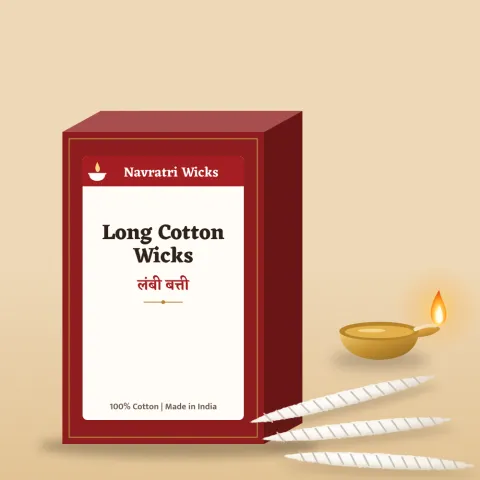
Pull a longer strip of cotton, about the length of your hand. Place it on your thigh or on a clean wooden board and roll it under your palm, again in one direction, until it forms a firm, even cord. Pinch both ends to taper them.
Tips that make the difference
Keep your hands dry. A little talc or rice flour on the palms stops cotton sticking. Roll firmly; a loose wick flares and smokes. Make wicks of the same size so each diya burns for about the same time.
Storing homemade wicks
Store wicks in a closed steel dabba or glass jar in a dry place. Cotton absorbs moisture, and damp wicks are hard to light, especially in the monsoon.
When buying makes more sense
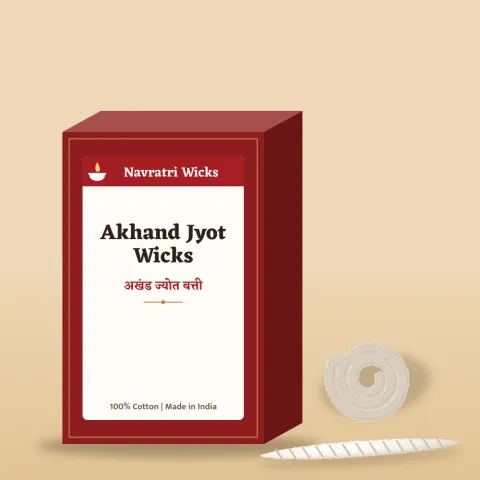
Hand-rolling a few dozen wicks is relaxing. Rolling a thousand for Diwali, or akhand jyot wicks thick and long enough for nine days, is a different job. That's when a ready pack saves the afternoon. Either way, start with 100% cotton: synthetic blends melt instead of burning cleanly.



 Akhand jyoti for Navratri: keeping the lamp alight for nine nights
 Phool batti or lambi batti? Choosing the right wick for every diya
 Storing cotton wicks in the monsoon so they light first time